

Body-Brain physiological waves meet the waves of the Amalfi Coast
Visit the website: www.waves-conference.com
For decades now, both cognitive and translational neuroscience have corroborated the pivotal role of neural oscillations in perception, cognition, and motor behavior in health and pathology. However, these research lines have almost exclusively showcased the tight link between brain activity and behavior, while neglecting the essential and modulatory influence of the body and its peripheral physiological activity.
During this conference, we will present and discuss recent exciting evidence showing that neural excitability, information processing, and overt behavior are distinctly influenced by physiological body signals. This invites the combined assessment of respiration, heart, and gastrointestinal rhythms together with brain activity and promises to unravel dynamic and holistic interactions between peripheral and brain physiology that critically informs and advances our understanding of how we perceive, act, and evaluate the dynamically changing environment we live in.

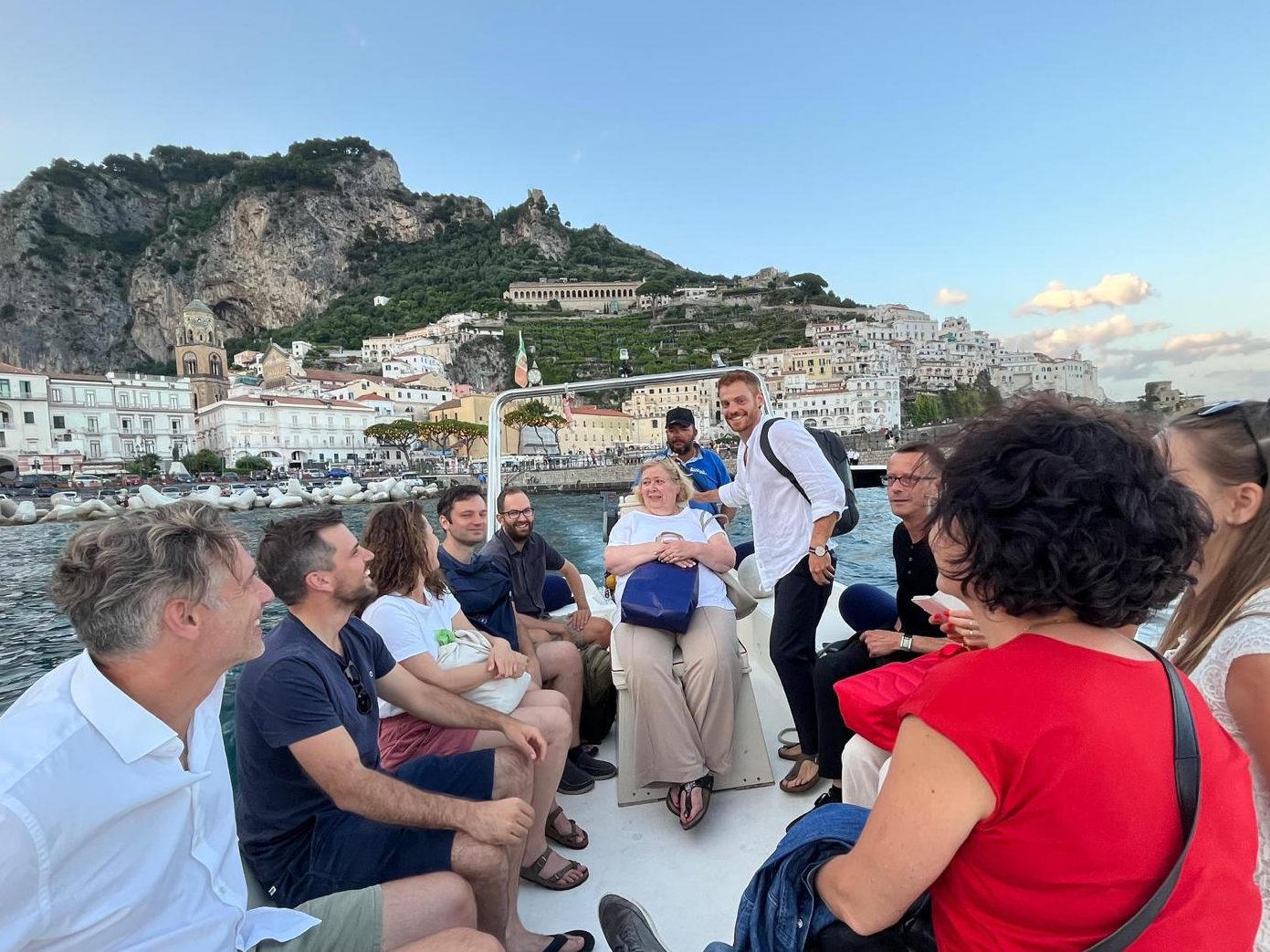
>70 researchers and academics from all over the world gathered in Salerno, southern Italy (Antonio’s hometown).
Next to 3 exciting, productive, constructive days of discussions, the Waves crowd enjoyed the southern Italian cuisine, visited the Amalfi coast and the Greek temples in Paestum. A beach party perfectly wrapped up this fantastic journey – the first ‘Waves’ conference of a series!
Thank you all who joined us, and thanks the sponsors for their support: BrainProducts, mbt, Mentalab, Artinis.



 BAND Lab