
About me
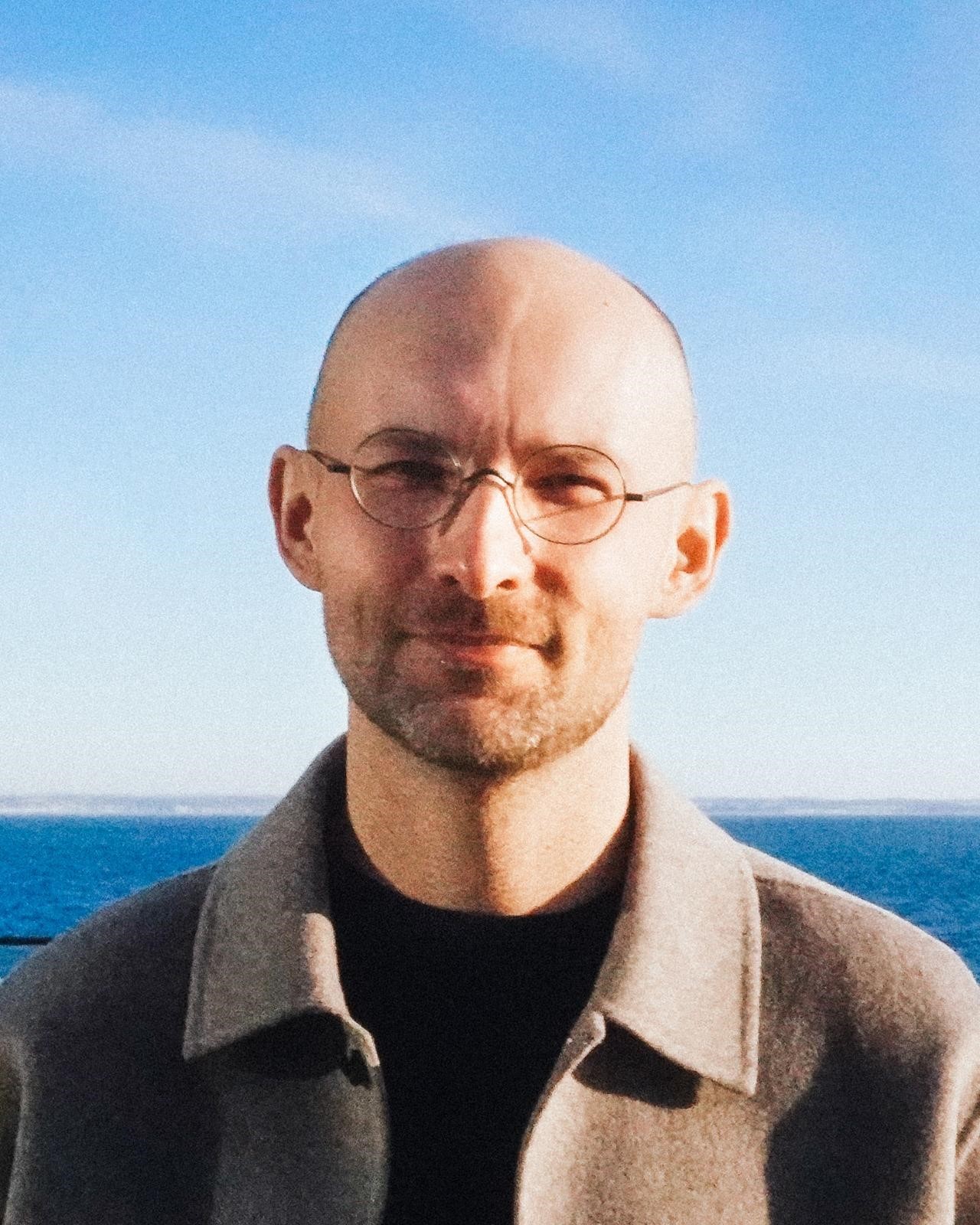
As a cognitive computational neuroscientist, I combine empirical and theoretical work at the interface of cognitive, computational, and systems neuroscience. My primary focus is on the neural mechanisms of predictive coding and their modulation by cognitive factors.
Since 2024 I have been an assistant professor in the Department of Neuropsychology and Psychopharmacology at Maastricht University. I am also a group leader of the Prediction and Memory Lab, with lab members in Maastricht as well as at Free University Berlin.
Previously, I graduated from University of Amsterdam (MSc Brain and Cognitive Sciences) and Adam Mickiewicz University in Poznań (MA Psychology). I obtained my PhD in Psychology at the Humboldt University Berlin (Berlin School of Mind and Brain). I completed my postdoctoral training in leading cognitive and computational neuroscience groups at University College London (Karl Friston), Oxford University (Kia Nobre), City University of Hong Kong (Jan Schnupp), Max Planck Institute for Empirical Aesthetics (Lucia Melloni), and European Neuroscience Institute (Caspar Schwiedrzik), spearheading empirical and modelling studies of the neural mechanisms of prediction error signaling. In 2022, I joined the Free University Berlin as a visiting professor and group leader. My research has been funded by the European Commission, German Research Foundation, and Research Grants Council Hong Kong, among others.
Links to find out more
Research
Generating predictions and updating them in face of new evidence is arguably one of the key brain functions. For instance, when you listen to speech in a noisy environment, your brain interprets acoustic inputs through an internal model of what and when a particular speaker might say next. Given its importance and ubiquity, predictive processing has been suggested to rely on canonical or universal neural mechanisms. However, my research often challenges such universality, and instead shows that the neural mechanisms of predictive processing are specific to particular brain regions, stimulus features, and cognitive contexts. Specifically, I work on the following topics:
- Individual and group differences in predictive processing
- Prediction of stimulus contents (“what”) vs. timing (“when”)
- Attentional effects on predictive processing
- Neural encoding of prediction vs. memory
- Predictive processing at different stages of learning
Methods
- Computational modelling
- EEG
- MEG
- fMRI
- Electrophysiology
- Behavioural measures
- Brain stimulation
- Matlab, SPM, Fieldtrip, Python
Qualifications and Professional Experience
- 2022-2024: Visiting Professor and Group Leader at Free University Berlin (Germany)
- 2017-2022: Marie Sklodowska-Curie Global Fellowship / Postdoc in Auditory Neuroscience at City University of Hong Kong, Max Planck Institute for Empirical Aesthetics (Frankfurt, Germany), European Neuroscience Institute (Göttingen, Germany)
- 2013-2017: Postdoc in Theoretical Neuroscience at University College London and in Experimental Psychology at Oxford University (United Kingdom)
- 2009-2013: PhD in Psychology at Humboldt University / Berlin School of Mind and Brain (Germany)
- 2007-2009: MSc in Brain and Cognitive Sciences at University of Amsterdam (the Netherlands)
- 2003-2008: MA in Psychology at Adam Mickiewicz University, Poznan (Poland)
Selected Publications
- Gütlin D, McDermott H, Grundei M, Auksztulewicz R (2024) Model-based approaches to investigating mismatch responses in schizophrenia. Clin EEG Neurosci
- Peng F, Bizley JK, Schnupp JWH, Auksztulewicz R (2023) Dissociable neural correlates of multisensory coherence and selective attention. J Neurosci
- Auksztulewicz R, Rajendran V, Peng F, Schnupp JWH, Harper N (2023) Omission responses in local field potentials in rat auditory cortex. BMC Biology
- Cappotto D, Kang HJ, Li KY, Poeppel D, Melloni L, Schnupp JWH, , Auksztulewicz R (2022) Simultaneous Mnemonic and Predictive Representations in the Auditory Cortex. Current Biology
- Luo D, Li KY, An HJ, Schnupp J, Auksztulewicz R (2021) Learning boosts the decoding of sound sequences in rat auditory cortex. Curr Res Neurobiol
- Auksztulewicz R, Myers NE, Schnupp JW, Nobre AC (2019) Rhythmic temporal expectation boosts neural activity by increasing neural gain. J Neurosci
- Auksztulewicz R, Schwiedrzik CM, Thesen T, Doyle W, Devinsky O, Nobre AC, Schroeder CE, Friston KJ, Melloni L (2018) Not All Predictions Are Equal: “What” and “When” Predictions Modulate Activity in Auditory Cortex through Different Mechanisms. J Neurosci
- Auksztulewicz R, Friston KJ, Nobre AC (2017) Task relevance modulates the behavioural and neural effects of sensory predictions. PLoS Biology
- Auksztulewicz R, Friston K (2016) Repetition suppression and its contextual determinants in predictive coding. Cortex
- Auksztulewicz R, Friston K (2015) Attentional enhancement of auditory mismatch responses: a DCM/MEG study. Cerebral Cortex
For more details, please send an email to ryszard.auksztulewicz@maastrichtuniversity.nl
 BAND Lab