
About me
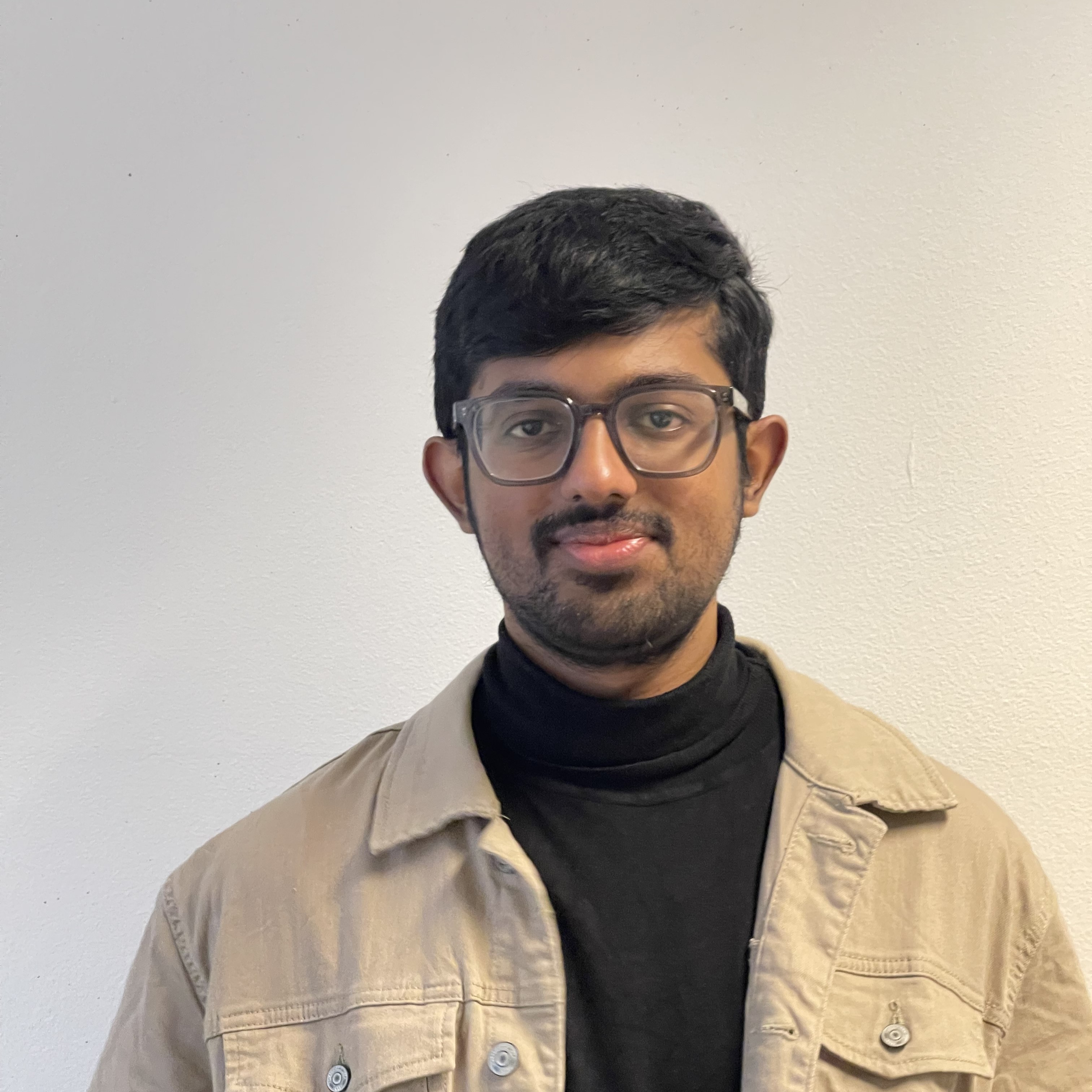
Born in India and spent most of my childhood years in the United Arab Emirates. Coming from a biomedical engineering background, I started to develop a strong interest in signal processing and modelling of physiological systems. This provided me with the opportunity to delve more deeply into the fundamentals of biophysics, which helped me to take a closer look at electrophysiological signals in the brain.
The journey to pursue neuroscience research began here and various life experiences including a brief spell working as a part-time sports journalist brought me closer to the stories of athletes from 1966 World Cup winning team who succumbed to neurodegenerative disorders. These encounters became pivotal moments that motivated me to channel my efforts towards a career in research, with a primary focus on EEG methods and movement sciences. Beyond this focus, my interests extend to computational modeling, conducting forward model simulations, and integrating cutting-edge neuro-technological devices into my studies.
Research
People living with Parkinson’s disease mostly encounter problems with the way they walk. Remarkably, these difficulties often dissipate when exposed to either auditory or visual cues. In this study, we will investigate why cueing works really well in countering dopamine level related gait limitations. To answer this question, we will uniquely apply the theoretical framework of predictive coding as a guide to identify the neural and behavioural fingerprints of cued and uncued walking using state-of-the-art mobile brain-body imaging techniques.
To deliver these aims, we will be designing and testing our experiments on Interactive Walkway. This will allow us to experimentally induce prediction errors and take a closer look at beta-band activity associated with predictions of sensorimotor consequences of movements. Through this research, we will be testing different visual and auditory cueing strategies under both on/off state medication to determine optimal cueing templates for assisting gait in people with Parkinson’s disease from the perspective of predictive coding framework.
Methods
- EEG
- EMG
- 3D Motion Tracking
- Behavioural Measures
- MATLAB – SPM, Fieldtrip
- Statistics – R Programming, JASP
Qualifications and Professional Experience
- 2024 – Present: PhD candidate on NWO-funded Movement Disorders Project at Maastricht University (Maastricht, Netherlands). Supervision: Prof. Dr. Sonja Kotz, Dr. Tjeerd Boonstra, Dr. Melvyn Roerdink.
- 2022 – 2023: MSc Physics and Engineering in Medicine: Medical Image Computing at University College London (London, United Kingdom).
- MSc Research Thesis – Determining Orientation of Deep Brain Stimulation Leads using EEG.Supervision: Prof. Vladimir Litvak, Dr. Kirill Aristovich.MSc Course Project: Bilateral Filtering of 2D and 3D Re-sliced Ultrasound Prostate Images. Coordinator: Dr. Yipeng Hu
- 2017-2021: Bachelor of Technology in Electronics and Biomedical Engineering at Govt. Model Engineering College, Kochi (Kerala, India)
- Undergraduate Thesis – Hand Exoskeleton for Stroke Rehabilitation and Application of Mirror Therapy. Supervision: Dr. Minimol Balakrishnan.
- 2020: Junior Clinical Research Engineering Intern at Curneu Medtech, IIT Madras Research Park (Chennai, India)
 BAND Lab