Body-Brain Waves

Body-Brain physiological waves meet the waves of the Amalfi Coast

Visit the website: www.waves-conference.com

For decades now, both cognitive and translational neuroscience have corroborated the pivotal role of neural oscillations in perception, cognition, and motor behavior in health and pathology. However, these research lines have almost exclusively showcased the tight link between brain activity and behavior, while neglecting the essential and modulatory influence of the body and its peripheral physiological activity.

During this conference, we will present and discuss recent exciting evidence showing that neural excitability, information processing, and overt behavior are distinctly influenced by physiological body signals. This invites the combined assessment of respiration, heart, and gastrointestinal rhythms together with brain activity and promises to unravel dynamic and holistic interactions between peripheral and brain physiology that critically informs and advances our understanding of how we perceive, act, and evaluate the dynamically changing environment we live in.

>70 researchers and academics from all over the world gathered in Salerno, southern Italy (Antonio’s hometown).

Next to 3 exciting, productive, constructive days of discussions, the Waves crowd enjoyed the southern Italian cuisine, visited the Amalfi coast and the Greek temples in Paestum. A beach party perfectly wrapped up this fantastic journey – the first ‘Waves’ conference of a series!

Thank you all who joined us, and thanks the sponsors for their support: BrainProducts, mbt, Mentalab, Artinis.

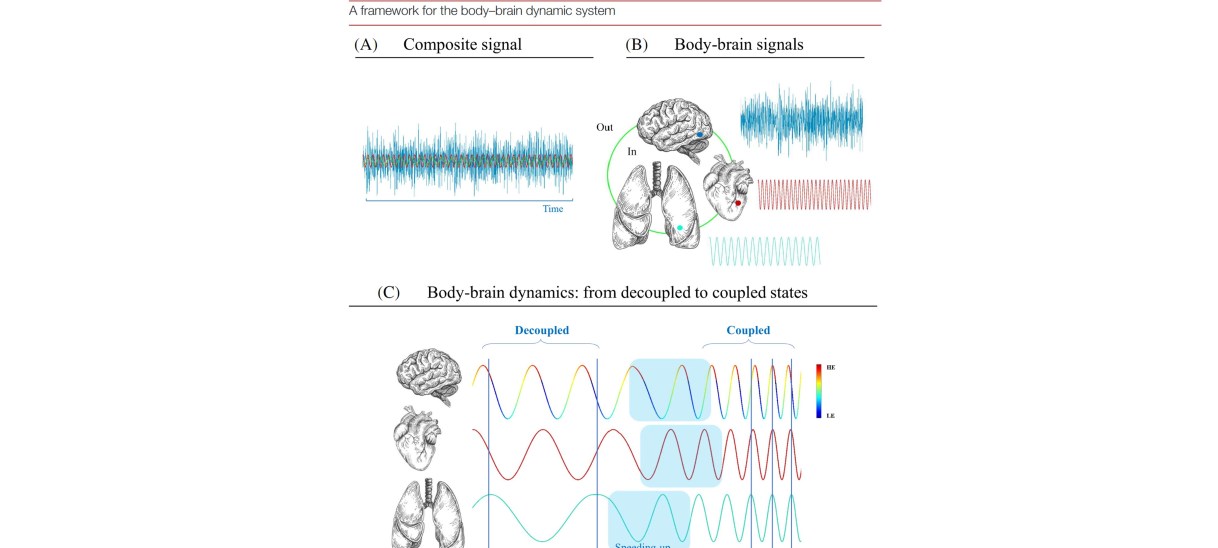
Cognition through the lens of a body-brain dynamic system

Stepping back from Descartes’ and Newton’s reductionist principles, accumulating evidence shows that body signals (e.g., respiratory and heart rhythms) modulate neural activity and influence cognitive functions.

The body-brain dynamic system (BBDS) provides a dynamic and holistic perspective on the body–brain interface, and aims to explain how such intricate interactions enable individuals to efficiently act in and adapt to a dynamically changing environment.

Find our opinion piece on Trends in Neurosciences.

EMOSEX – Emotion prevails over sex during implicit judgement of faces.

Do we associated anger more with a male face and happiness more with a female face? Does this association between emotion and gender also extend to the auditory domain (e.g., voices)?

Faces and voices are more likely to be judged as male when they are angry, and as female when they are happy, new research has revealed. The study found that how we understand the emotional expression of a face or voice is heavily influenced by perceived sex, and vice versa. He said: “This study shows how important it is not to rely too much on your first impressions, as they can easily be wrong. “Next time you find yourself attributing happiness or sadness to a woman be aware of your bias and possible misinterpretation.”

If these questions poke your interest, please read here and find our article here.

New paper on eLife: Temporo-cerebellar connectivity underlies timing constraints in audition

In this article we tested whether temporo-cerebellar disconnection is associated with the processing of sounds at short-timescales. The findings support the view that the encoding and modeling of rapidly modulated auditory spectro-temporal properties can rely on a temporo-cerebellar interface. We discuss these findings in view of the conjecture that proactive adaptation to a dynamic environment via internal models is a generalizable principle.

You can find the article here: https://elifesciences.org/articles/67303

Lab members contributing: Sonja Kotz and Michael Schwartze